
Environmental Benefits of Recycling Lead: Why Sustainable Lead Recovery Matters

Environmental Benefits of Recycling Lead
Introduction
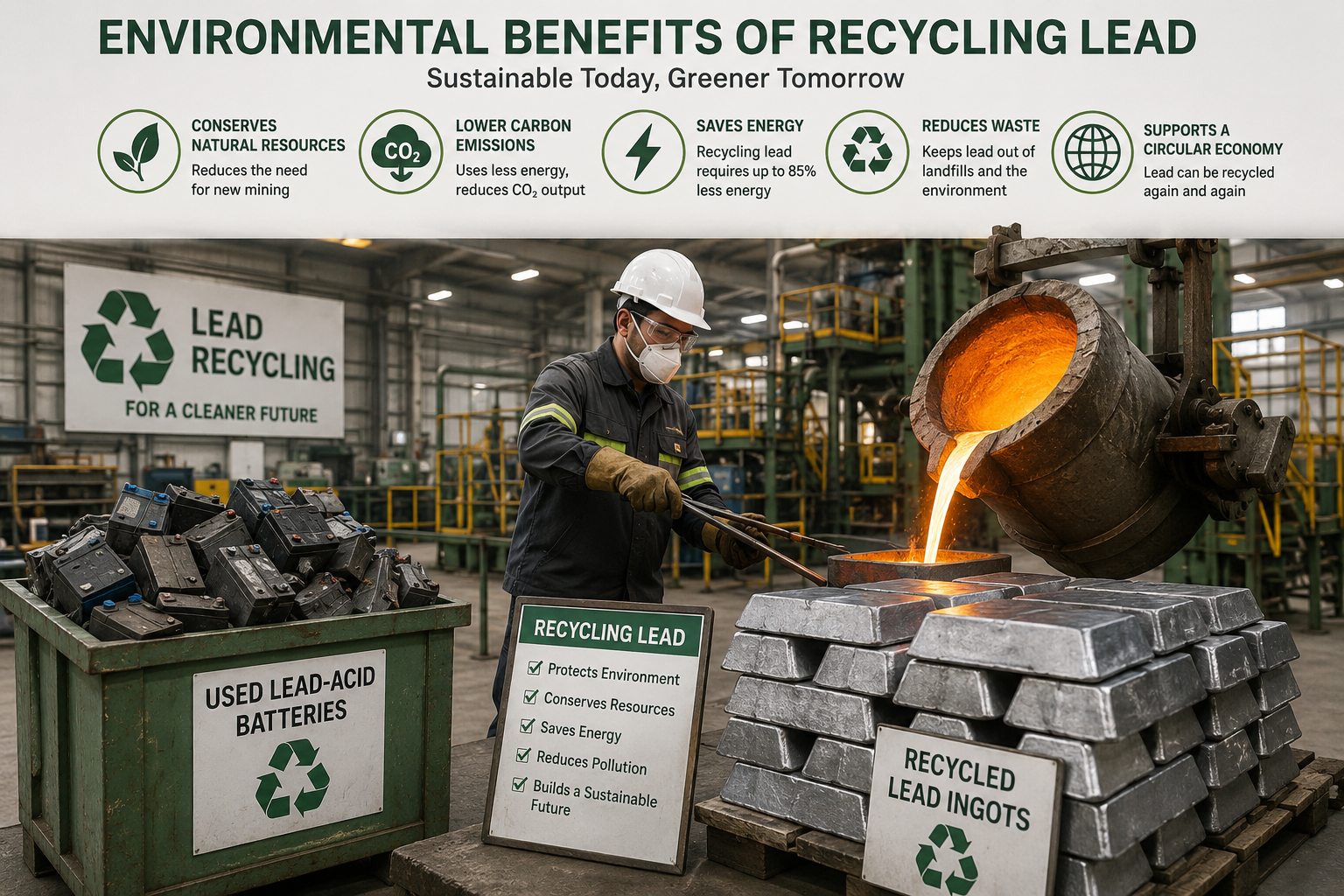
Environmental Benefits of Recycling Lead have made lead recycling one of the most successful examples of sustainable resource management in the metals industry. Instead of relying solely on newly mined ore, manufacturers can recover valuable lead from used batteries and industrial scrap while maintaining high-quality production standards.
The Environmental Benefits of Recycling Lead extend far beyond waste reduction. Recycling significantly decreases energy consumption, lowers carbon emissions, conserves natural resources, and helps industries meet international sustainability goals. As environmental awareness continues to grow, recycled lead has become an essential component of responsible industrial development.
What Is Lead Recycling?
Lead recycling is the process of recovering lead from discarded products such as lead-acid batteries, industrial equipment, cable sheathing, and manufacturing scrap. After collection, the materials are processed, refined, and converted into new lead ingots or lead alloys that meet industrial quality standards.
Unlike many other metals, lead can be recycled repeatedly without a significant loss of its physical or chemical properties. This makes it one of the world's most recyclable industrial metals.
Why Lead Recycling Matters
Mining and refining primary lead require significant amounts of energy, water, and raw materials. Recycling dramatically reduces the need for new mining operations while preserving valuable natural resources.
As global demand for batteries, renewable energy storage, and industrial products continues to increase, recycled lead plays a crucial role in ensuring a stable and sustainable supply chain.
Key Environmental Benefits of Recycling Lead؟
Conserves Natural Resources
Recycling reduces dependence on lead mining by recovering valuable metal from existing products. This helps preserve mineral reserves for future generations.
Reduces Greenhouse Gas Emissions
Producing secondary lead generally requires far less energy than extracting and refining primary lead. Lower energy consumption results in reduced carbon dioxide emissions and a smaller environmental footprint.
Saves Energy
Modern lead recycling facilities consume considerably less energy than primary smelting operations, making recycled lead a more sustainable option for manufacturers.
Minimizes Industrial Waste
Recycling diverts millions of used batteries and lead-containing products from landfills each year. Proper recycling prevents hazardous waste from entering the environment.
Supports the Circular Economy
Lead recycling allows valuable materials to remain in continuous use rather than becoming waste. This closed-loop production model supports long-term sustainability and efficient resource management.
Protects Ecosystems
Reducing mining activities helps minimize habitat destruction, land degradation, and disruption to surrounding ecosystems.
Lead Recycling and Battery Manufacturing
The majority of recycled lead comes from spent lead-acid batteries. After collection, batteries are safely dismantled, and their components—including lead, plastic, and electrolyte—are processed separately.
Recovered lead is refined and reused to manufacture new batteries, creating one of the most successful closed-loop recycling systems in the industrial sector.
Economic Benefits Alongside Environmental Advantages
Lead recycling offers significant economic value in addition to environmental protection.
Key advantages include:
Lower production costs
Reduced raw material dependence
Stable lead supply
Increased resource efficiency
Job creation in recycling industries
Reduced waste management expenses
International Standards for Sustainable Lead Recycling
Responsible recycling facilities operate according to internationally recognized environmental and quality management systems, including:
ISO 14001 Environmental Management
ISO 9001 Quality Management
Occupational health and safety regulations
Hazardous waste handling standards
National environmental protection laws
Compliance with these standards helps ensure safe operations while protecting workers and the environment.
Challenges in Lead Recycling
Although lead recycling offers many benefits, it also requires strict environmental controls.
Responsible facilities must:
Prevent lead emissions
Control dust generation
Properly treat wastewater
Safely manage slag and by-products
Protect employee health through appropriate safety measures
Modern recycling technologies continue to improve environmental performance while increasing recovery efficiency.
The Future of Sustainable Lead Recycling
As renewable energy systems, electric infrastructure, and energy storage technologies continue to expand, demand for recycled lead is expected to grow steadily.
Advances in recycling technology, stricter environmental regulations, and increasing investment in circular economy initiatives will further strengthen the role of recycled lead in global manufacturing.
Conclusion
The Environmental Benefits of Recycling Lead make it one of the most sustainable practices in the metals industry. By reducing mining activities, lowering carbon emissions, conserving natural resources, minimizing waste, and supporting the circular economy, lead recycling contributes significantly to environmental protection and sustainable industrial growth.
Companies that prioritize responsible recycling practices not only reduce their environmental impact but also strengthen supply chain resilience, improve resource efficiency, and meet the growing expectations of environmentally conscious customers.
Frequently Asked Questions (FAQ)
1. Why is lead recycling important for the environment?
Lead recycling reduces mining activities, conserves natural resources, lowers greenhouse gas emissions, and prevents hazardous waste from contaminating the environment.
2. Can lead be recycled indefinitely?
Yes. Lead can be recycled repeatedly without significant loss of quality, making it one of the most recyclable industrial metals.
3. What products are commonly recycled for lead recovery?
The primary source is used lead-acid batteries, along with industrial scrap, cable sheathing, radiation shielding materials, and manufacturing waste.
4. Does recycled lead meet industrial quality standards?
Yes. Modern refining processes produce recycled lead that meets strict industrial specifications and international quality standards.
5. How does lead recycling support the circular economy?
Lead recycling keeps valuable materials in continuous use, reduces waste generation, lowers demand for virgin raw materials, and promotes sustainable manufacturing.