
Lead Ingot Market Trends and Future Outlook
 Lead Ingot Market Trends are shaping the future of the global metals industry as demand for energy storage, battery manufacturing, and sustainable recycling continues to rise. Understanding current market dynamics, technological developments, and long-term industry forecasts enables manufacturers, exporters, and buyers to make informed business decisions. This guide explores the latest trends, growth drivers, challenges, and future opportunities in the international lead ingot market.
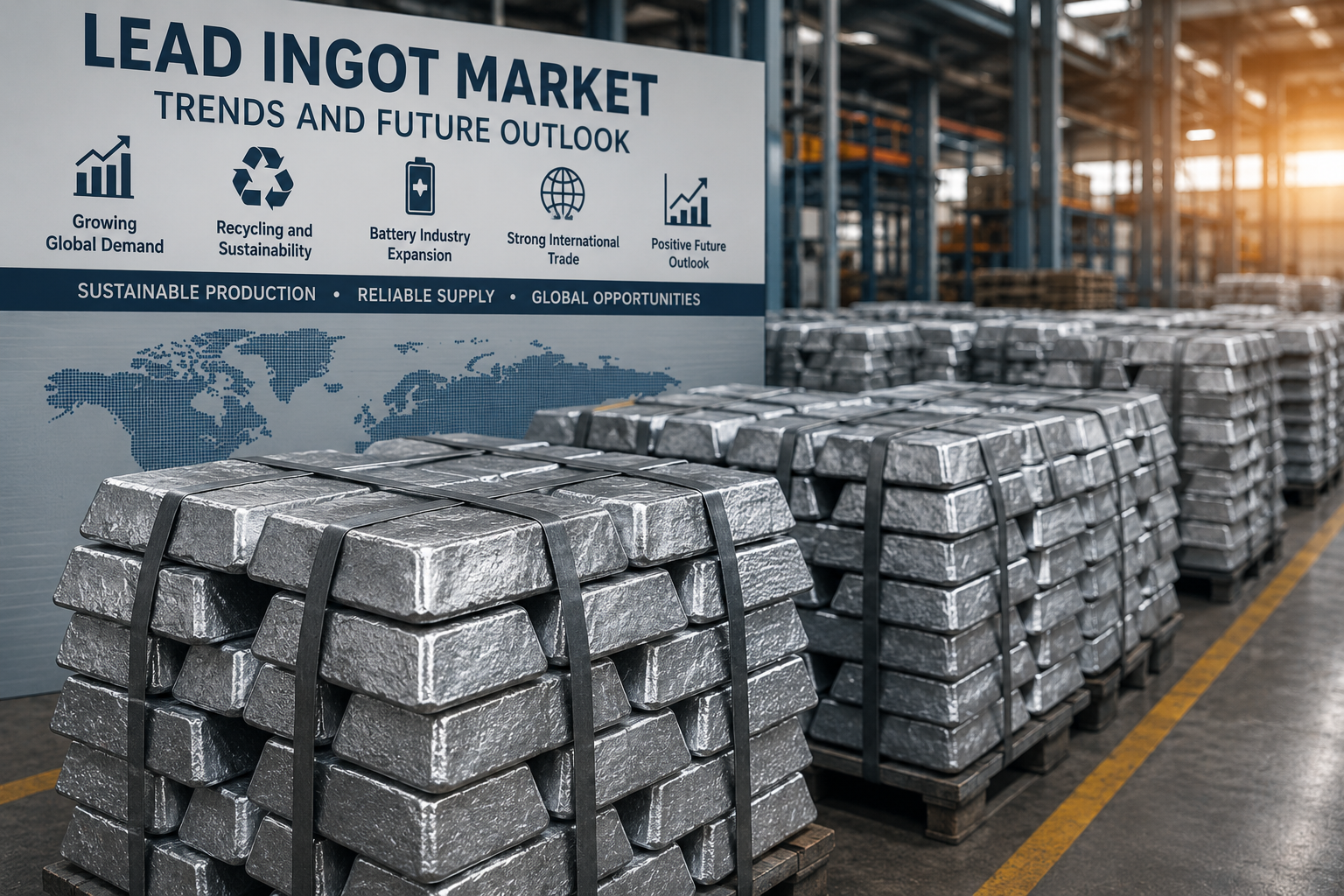
Lead Ingot Market Trends and Future Outlook
Introduction
Lead Ingot Market Trends have become increasingly important for manufacturers, exporters, investors, and industrial buyers seeking to understand the evolving global metals industry. Growing demand for lead-acid batteries, renewable energy storage, and recycled metals continues to influence production volumes and international trade.
The Lead Ingot Market Trends observed today are driven by technological innovation, stricter environmental regulations, expanding recycling infrastructure, and changing supply-demand dynamics. Companies that closely monitor these trends are better positioned to respond to market fluctuations, improve competitiveness, and identify new business opportunities.
Understanding the Global Lead Ingot Market
Lead ingots are refined blocks of lead used as raw materials in numerous industries. They are produced from both primary mining operations and secondary recycling processes, with recycled lead accounting for a significant share of global production.
The market serves various sectors, including:
Battery manufacturing
Automotive industry
Renewable energy storage
Radiation shielding
Cable manufacturing
Construction
Chemical processing
Marine applications
As industrial demand grows worldwide, lead remains one of the most valuable and recyclable engineering metals.
Current Lead Ingot Market Trends
Growing Demand for Lead-Acid Batteries
Lead-acid batteries continue to dominate automotive, backup power, and industrial energy storage applications. This sector remains the largest consumer of refined lead worldwide.
Despite advances in lithium-ion technology, lead-acid batteries remain highly competitive because of their affordability, reliability, and nearly complete recyclability.
Expansion of Lead Recycling
One of the strongest industry trends is the increasing use of recycled lead. Modern recycling technologies reduce environmental impact while providing manufacturers with a stable and cost-effective source of raw material.
Many countries continue investing in advanced recycling facilities to strengthen domestic supply chains.
Rising Focus on Sustainability
Governments and manufacturers are adopting more sustainable production practices by improving energy efficiency, reducing emissions, and promoting circular economy initiatives.
Sustainability has become a major competitive advantage within the global lead industry.
Increasing International Trade
Global demand for high-quality lead ingots continues to expand across Asia, the Middle East, Europe, and Africa.
International suppliers capable of meeting strict quality standards and reliable delivery schedules are gaining greater market share.
Factors Influencing Lead Prices
Several variables affect global lead prices.
Supply and Mining Output
Production levels from major mining countries significantly influence market availability.
Recycling Capacity
Higher recycling rates help stabilize supply while reducing dependence on newly mined lead.
Battery Industry Demand
Growth in automotive manufacturing and energy storage systems directly increases lead consumption.
Energy Costs
Smelting and refining require substantial energy, making electricity and fuel prices important market drivers.
Government Regulations
Environmental legislation, mining policies, and international trade regulations also affect production costs and global supply.
Regional Market Outlook
Asia-Pacific
Asia remains the world's largest producer and consumer of lead products, driven by strong industrial growth and expanding battery manufacturing.
Europe
European markets increasingly prioritize sustainable production, environmental compliance, and high-quality recycled lead.
Middle East
Infrastructure development and industrial expansion continue creating new opportunities for lead ingot suppliers throughout the region.
North America
The market emphasizes advanced recycling technologies, environmental protection, and efficient manufacturing practices.
Emerging Opportunities
Several industries are expected to support future market growth.
Renewable Energy Storage
Backup power systems and renewable energy installations continue increasing demand for lead-based energy storage solutions.
Electric Infrastructure
Telecommunication networks, data centers, and emergency power systems require dependable battery technologies.
Industrial Manufacturing
Heavy industries continue relying on lead alloys for specialized engineering applications.
Radiation Protection
Healthcare, nuclear facilities, and research laboratories remain important consumers of lead products.
Challenges Facing the Industry
Although the outlook remains positive, several challenges require attention.
Environmental regulations
Volatile raw material prices
Rising energy costs
International competition
Supply chain disruptions
Continuous investment in cleaner technologies
Companies that invest in innovation and sustainability will be better positioned to overcome these challenges.
Future Outlook for the Lead Ingot Market
The long-term outlook for the lead ingot industry remains promising.
Key growth drivers include:
Continued demand for lead-acid batteries
Expansion of renewable energy storage
Growth in secondary lead production
Increased recycling investments
Rising infrastructure development
Improved refining technologies
Strong global demand for sustainable metals
Lead recycling is expected to become even more important as governments strengthen environmental regulations and industries adopt circular economy strategies.
Why Quality Will Matter More Than Ever
As international buyers become more selective, product quality, certified chemical composition, reliable logistics, and sustainable manufacturing practices will become essential competitive advantages.
Manufacturers capable of delivering consistent purity, accurate documentation, and dependable supply chains will continue strengthening their position in global markets.
Conclusion
The Lead Ingot Market Trends indicate a positive future driven by growing industrial demand, expanding recycling infrastructure, technological improvements, and increasing sustainability initiatives. While challenges such as regulatory changes and price volatility remain, companies that prioritize quality, environmental responsibility, and innovation will continue to benefit from long-term market growth.
For exporters, manufacturers, and industrial buyers, understanding these market trends provides valuable insight for making informed investment and purchasing decisions in an increasingly competitive global marketplace.
Frequently Asked Questions (FAQ)
1. What is driving the growth of the lead ingot market?
The primary growth drivers include increasing demand for lead-acid batteries, expanding recycling activities, renewable energy storage, and industrial infrastructure development.
2. Why is recycled lead becoming more important?
Recycled lead conserves natural resources, reduces energy consumption, lowers carbon emissions, and provides a stable supply of high-quality raw material.
3. Which industries consume the most lead ingots?
Battery manufacturing is the largest consumer, followed by construction, radiation shielding, cable manufacturing, chemical processing, and heavy industry.
4. What factors influence lead prices?
Lead prices are affected by mining output, recycling capacity, battery demand, energy costs, government regulations, and global economic conditions.
5. What is the future outlook for the lead ingot industry?
The outlook remains positive due to continued demand for energy storage, sustainable manufacturing, advanced recycling technologies, and global infrastructure development.