
Alloy Lead Ingot

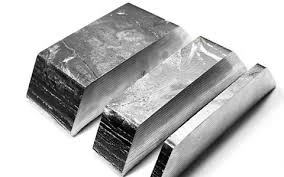
An alloy lead ingot is a fundamental industrial commodity, representing one of the most versatile and historically significant metallic forms in human civilization. Defined as a soft, dense, and highly malleable metal casting, the lead ingot typically takes shape as a billet, rod, or rectangular block, produced through the controlled melting and casting of either refined pure lead or specifically formulated lead-based alloys. The base metal, lead, is characterized by its distinctive bluish-white color when freshly cut, though it rapidly oxidizes to a dull gray upon exposure to air. Its remarkable softness, combined with exceptional malleability and ductility, allows it to be easily shaped, rolled, or extruded without fracturing—properties that have made it indispensable across millennia.
The production of alloy lead ingots begins with the smelting of primary lead ore (galena) or, increasingly, the recycling of scrap lead from spent batteries, cable sheathing, and industrial waste. This secondary refining process is both economically and environmentally critical, as lead is one of the most recycled metals globally. During smelting, impurities such as copper, tin, antimony, and bismuth are removed through selective oxidation and fluxing. For alloyed ingots, precise quantities of alloying elements—most commonly antimony, tin, calcium, or selenium—are introduced to the molten lead bath. Antimony, for instance, significantly increases hardness and mechanical strength, making the alloy suitable for battery grids and shot pellets. Tin improves fluidity and casting fidelity, while calcium enhances corrosion resistance, a vital trait for maintenance-free automotive batteries. The molten alloy is then poured into cast-iron molds, cooled under controlled conditions, and solidified into uniform ingots weighing anywhere from 5 to 50 kilograms, depending on end-use requirements.
The applications of alloy lead ingots are extraordinarily diverse, spanning construction, transportation, energy storage, and radiation shielding. By far the largest consumer is the automotive industry, where lead-antimony and lead-calcium alloys form the heart of starter, deep-cycle, and stationary batteries. These ingots are also fundamental to the production of extruded pipes, rolled sheets, and cable coverings used in chemical plants and underground telecommunications, owing to lead’s inherent resistance to corrosive soils and acidic environments. In the realm of public health and safety, lead ingots are re-forged into bricks, slabs, and protective aprons for X-ray and nuclear shielding, exploiting lead’s high atomic number and density to attenuate ionizing radiation effectively. Additionally, the marine and construction sectors utilize lead ingots for ballast keels, vibration dampers, and soundproofing barriers, benefiting from the metal’s compact weight and energy-absorbing capacity.
However, the handling and processing of alloy lead ingots demand rigorous environmental and occupational safeguards. Lead is a cumulative neurotoxin, and exposure to its dust, fumes, or soluble compounds poses serious health risks, including neurological damage, hypertension, and reproductive disorders. Consequently, modern foundries employ closed-system melting furnaces, high-efficiency particulate air (HEPA) filtration, and continuous atmospheric monitoring to ensure compliance with stringent regulations such as OSHA’s permissible exposure limits and the EU’s REACH directives. End-of-life lead products are meticulously collected and recycled, achieving recycling rates exceeding 95% in many developed nations—a testament to the circular economy model that defines the lead industry today.
In conclusion, the alloy lead ingot is far more than a simple metal block; it is a cornerstone of sustainable industrial manufacturing. From empowering the electric vehicle revolution to safeguarding medical imaging technicians, its unique combination of physical, chemical, and mechanical properties ensures that lead alloys remain irreplaceable in modern technology. As research continues into novel alloy compositions and greener refining techniques, the lead ingot will undoubtedly evolve, but its fundamental role as a reliable, workable, and recyclable engineering material will persist for generations to come.