
Crude/Raw Lead Ingot
 A lead ingot is a soft and malleable metal, classified as a heavy metal. Owing to its excellent corrosion resistance and low melting point, lead ingots are utilized across a wide range of sectors and products. These include lead-acid batteries, cables, bearings, cathode ray tubes, counterweights, as well as the construction industry, the chemical sector, and automotive battery manufacturers. Its versatility stems from a unique combination of physical and chemical properties that make it suitable for both structural and functional applications.
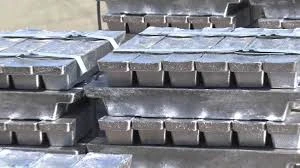
A lead ingot is a soft, heavy, and malleable piece of metal, typically cast in the form of billets, rods, or rectangular blocks. It is produced through the melting and solidification of either pure lead or lead-based alloys. Lead itself is a bluish-white metal, renowned for its remarkable malleability and ductility. However, the term "lead ingot" covers a broad spectrum of grades—from crude raw ingots to highly refined ultra-pure variants—each serving distinct industrial needs.
Crude or raw lead ingots represent the most basic commercial form of this metal. They are soft, workable, and classified as heavy metals due to their high density. Their outstanding resistance to corrosion, combined with a relatively low melting point, makes them indispensable across numerous sectors. Common applications include lead-acid batteries for automotive and backup power systems, protective cable sheathing, bearings, cathode ray tube glass, counterweights and balance scales, construction materials for soundproofing and vibration damping, chemical processing equipment, and the broader automotive battery manufacturing industry. Their ease of casting and forming, coupled with durability in harsh environments, ensures that crude lead ingots remain a staple commodity worldwide.
Moving up the quality ladder, alloy lead ingots are produced by introducing controlled amounts of alloying elements such as antimony, tin, calcium, or selenium. Antimony enhances hardness and mechanical strength, making the alloy ideal for battery grids and shot pellets. Tin improves fluidity during casting, while calcium boosts corrosion resistance—a critical feature for maintenance-free automotive batteries. These alloyed ingots are manufactured via smelting primary ore (galena) or recycling scrap from spent batteries and cable sheathing, followed by precise blending and casting into uniform blocks weighing between 5 and 50 kilograms. Beyond batteries, they are used in extruded pipes, rolled sheets, radiation shielding bricks, marine ballast keels, and industrial dampers.
At the pinnacle of quality lies the refined lead ingot with 99.98% purity—and even 99.99% in exceptional cases. These are the "Porsches" of the lead world, representing the highest standard of metallurgical refinement. Produced through sophisticated electrolytic processes or sourced from exceptionally pure sulfide ores like high-grade galena, this ultra-pure grade has trace impurities—particularly bismuth (Bi) and silver (Ag)—reduced to parts-per-million levels. Industries with extreme sensitivity to these contaminants, such as semiconductor manufacturing, high-precision solders, nuclear shielding components, and specialized chemical apparatus, exclusively rely on this premium material. Even minute amounts of bismuth or silver can embrittle the metal, alter its electrochemical performance, or compromise coating integrity, making high-purity lead non-negotiable for mission-critical uses.
Regardless of grade, all lead processing demands stringent environmental and occupational safeguards. Lead is a cumulative neurotoxin; exposure to its dust, fumes, or soluble compounds poses serious health risks, including neurological damage and reproductive disorders. Modern foundries employ closed-system furnaces, HEPA filtration, and continuous atmospheric monitoring to comply with regulations such as OSHA and REACH. Encouragingly, lead achieves recycling rates exceeding 95% in many developed nations, exemplifying a successful circular economy.
In conclusion, from crude ingots powering global transportation and construction to ultra-pure grades enabling advanced electronics and healthcare, lead remains irreplaceable. Its unique combination of density, malleability, corrosion resistance, low melting point, and recyclability ensures that both raw and refined lead ingots will continue to serve industry for generations to come.