
Refined Lead Ingot with 99.98% Purity
 These are the "Porsches" of the lead world—the pinnacle of quality and performance. A 99.98% pure lead ingot is typically produced through more sophisticated electrolytic refining processes or sourced from high-grade sulfide ore deposits, such as exceptionally pure galena. Industries with extreme sensitivity to trace impurities—particularly bismuth (Bi) and silver (Ag)—exclusively opt for this ultra-high-purity grade, as even minute concentrations of these elements can critically compromise the performance of finished products.
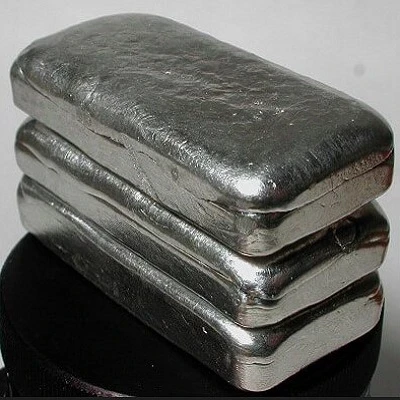
Alloy Lead Ingot and High-Purity Refined Lead Ingot
A lead ingot is a soft, heavy, and malleable piece of metal available in various shapes such as billets, rods, and blocks. It is produced through the melting and casting of pure lead or lead alloys. Lead itself is a soft metal with a bluish-white hue, known for its malleability and ductility. However, the term "lead ingot" encompasses a wide spectrum of grades, ranging from common alloyed variants to ultra-refined products that represent the apex of metallurgical quality.
Alloy lead ingots are fundamental industrial commodities, typically containing controlled additions of antimony, tin, calcium, or selenium to enhance specific properties. Antimony increases hardness and mechanical strength, making the alloy ideal for battery grids and shot pellets; tin improves casting fluidity; and calcium boosts corrosion resistance—a critical feature for maintenance-free automotive batteries. These ingots are produced by smelting primary lead ore or recycling scrap from spent batteries and cable sheathing, followed by precise alloying and casting into uniform blocks weighing 5 to 50 kilograms. Their applications are extraordinarily diverse: they form the heart of starter and deep-cycle batteries, serve as extruded pipes and cable coverings in chemical plants, and are re-forged into radiation-shielding bricks and aprons for X-ray and nuclear protection. Additionally, the marine and construction sectors use them for ballast keels, vibration dampers, and soundproofing barriers.
At the opposite end of the quality spectrum lies the refined lead ingot with 99.98% purity—and even 99.99% in some cases. These are the "Porsches" of the lead world—the pinnacle of quality and performance. Unlike standard alloy grades, this ultra-pure material is produced through complex electrolytic refining processes or sourced from exceptionally high-grade sulfide ores, such as nearly pure galena. The removal of trace elements is so thorough that impurities like bismuth (Bi) and silver (Ag) are reduced to parts-per-million levels. Industries with extreme sensitivity to such contaminants—for instance, manufacturers of specialized semiconductors, high-precision solders, nuclear shielding components, or certain pharmaceutical and chemical apparatus—exclusively opt for this premium grade. Even minute concentrations of bismuth or silver can embrittle the metal, alter its electrochemical behavior, or compromise the integrity of thin coatings, making high-purity lead indispensable for mission-critical applications.
Nevertheless, all lead processing—whether alloyed or refined—demands rigorous environmental and occupational safeguards. Lead is a cumulative neurotoxin; exposure to its dust, fumes, or soluble compounds poses serious health risks. Modern foundries employ closed-system furnaces, HEPA filtration, and continuous atmospheric monitoring to comply with strict regulations. Encouragingly, lead achieves recycling rates exceeding 95% in many developed nations, exemplifying a successful circular economy. In conclusion, from robust alloy ingots powering global transportation to ultra-pure grades enabling cutting-edge electronics, lead ingots remain irreplaceable. Their unique combination of density, malleability, corrosion resistance, and recyclability ensures that both alloyed and refined lead will continue to serve industry for generations to come.